
News for professionals in the beauty industry
Highlights
L'Oreal Faces Need To Rethink Marketing Due To Voice Technology

Voice technology is expected to make L'Oreal rethink some aspects of the beauty company's marketing and branding strategies and practices. According to L'Oreal global ecommerce acceleration director Antoine Borde, these issues include many customers' inability to pronounce the name of brands, such as Maybelline. Related to this, marketers at beauty companies may need to stop using fancy names for their brands.[Image Credit: © L'Oréal 2017 Annual Report]

Select AI Innovations Show How It Could Transform Selection Of Skincare And Beauty Products
 Advances in artificial intelligence are impacting the way beauty industry provides services to its customers and various examples show how this is playing out. One industry-changing example comes from skincare company Proven, which developed an assessment system that selects and then delivers a ‘totally personalized’ skincare product. Another innovation comes from startup Function of Beauty, which offers customized shampoos and conditioners based on customer information gathered using big data and machine learning. Last, a mobile app called Mira, which is still in the beta phase, uses artificial intelligence to recommend beauty influencers and products that are specifically suited for customers.[Image Credit: © Proven]

Skin Care Start-up Opu Labs To Use its Own Cryptocurrency To Pay For Images Of Consumers’ Faces
 Opu Labs has created its own cryptocurrency, Opucoin, that it will use it to reward users who upload images of their face. The company will use AI to analyze the images for skin conditions and to be able to recommend appropriate treatments and to link consumers with dermatologists and personal beauty brands. This is part of an effort to build a database of facial images and personal data that the company can use to hone its AI and as a base to sell products and services. Founder Mark Bookman claims consumers are losing faith in advertisements for beauty products and would value an objective assessment to guide their choice. However, a reviewer of the AI-driven analysis found it to be inaccurate and the company acknowledges it remains a work in progress.[Image Credit: © Opu Labs, Inc]

Sephora Unveils A New And Interactive Concept Store in China
 Sephora opened a new concept store in Shanghai on September 21, 2018 that encourages customers to explore its popular beauty products using interactive technologies like Discovery Tables and Magic Mirrors. SEPHORA Asia president Benjamin Vuchot states that the store offers an excellent customer service that combines the Sephora website with the in-store experience creating an unprecedented omni-channel experience. The store also uses the photo editing app, Meitu, alongside its interactive Ecommerce Walls and Virtual Artist technologies. Sephora is known for using disruptive ideas and technologies to promote creativity and diversity across its stores worldwide since its establishment in Paris in 1969. [Image Credit: © Sephora, Inc.]
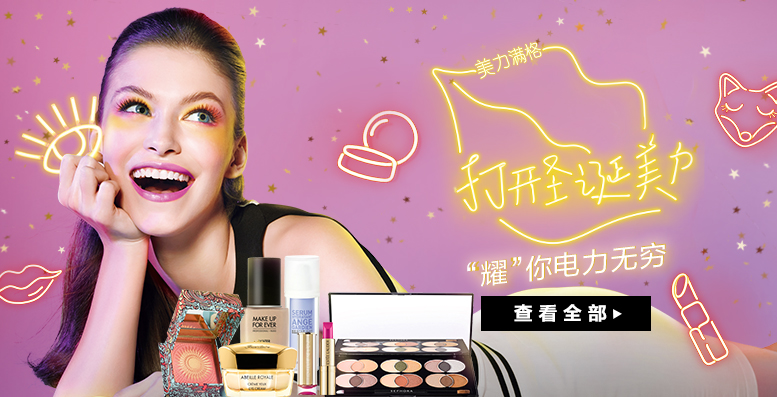
Beauty Tech Startup Wow How Integrates Gaming Technology Into Beauty App To Aide Color Choice

Wow How launched an app technology based on virtual and augmented reality that aims to offer women a higher level of personalization for color cosmetics applications. The advantages of the technology include real-time functionality and a Virtual MUA (Makeup Academy) function that has the ability to recognize facial features. Wow How CEO, Gaynor Matthews, claims that the app addresses a gap in the market, providing a tool that can help women save time when choosing the color of their cosmetics. Another important feature of the app is its check and correct function that is enhanced by a split screen 3D view.[Image Credit: © WOW HOW Ltd]
Cosmetics Companies in China Use Technological Innovations To Attract Young Consumers
 Brands are working with retailers in China to devise novel ways to engage consumers. Korean cosmetics brand, Innisfree, partnered with Chinese e-commerce firm Alibaba to establish a store in Hangzhou where consumers can use Tmall’s AR-powered Magic Mirror to virtually apply makeup. Startup 17Beauty established 12 “beauty boxes” in Beijing and Shanghai placed at busy locations. Consumers enter the self-service booth by scanning a QR code with a mobile app and once inside can get personalized makeup recommendations generated by a facial recognition system. Each booth contains a range of beauty products as well as some limited-edition makeup kits to attract new shoppers.[Image Credit: © Sephora Inc]
New Technologies Are Boosting Online Beauty Sales, Sometimes Bringing Disruption
 Key catalysts accelerating the growth of online beauty include increasing use of artificial intelligence, smaller beauty brands' adoption of direct-to-consumer marketing, and richer online content such as instructional video. Coty launched an AI-powered Fragrance Finder at the Boots website in the UK. It uses a 7-step questionnaire then suggests fragrance products to shoppers. Falling costs mean brands with $10-$15 million in sales can now offer DDTC experiences that compare well with major brands, leveling the playing field. And richer and educational content is engaging consumers. CEO of beauty retailer FeelUnique, Joël Palix, says the growth of online video content accelerated the shift of beauty to digital channels Online has room to grow strongly. Euromonitor estimates that just 1 in 9 dollars US shoppers spend on beauty products is transacted online, substantially less than other categories. [Image Credit: © Coty Inc.]

Benefit Cosmetics Launches New Augmented Reality Tool That Greatly Increased Conversion Rate
 Benefit Cosmetics launched a browser-based augmented reality tool called Brow Try-On, now live in 40 markets, which caused an 80 percent increase in conversion rate. This performance echoes a 2016 study by Poshly and Perfect365 which found that 78% of millennial women would be more inclined to purchase makeup online if they could first virtually try it on. Vice president of global digital, Cindy Shen, claims that previous augmented reality tools produced poor results which prompted the company to collaborate with facial mapping technology expert Modiface. Brows play a key role in the Benefit brand – it claims to be the #1 brow brand globally - and the company is expected to achieve $600 million in sales of brow products and services in 2018. More than one million visitors have tried the tool, which can create different brow styles on customers' faces via a live 3D option.[Image Credit: © Benefit Cosmetics LLC]
Beauty Brands Unveil Smart Concept Stores In China To Attract Tech-Savvy Consumers
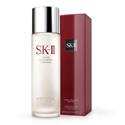
SK-II and Sephora both unveiled smart concept stores in Shanghai to attract younger Chinese beauty consumers who prefer an engaging experience that can be shared on social media. The Japanese brand's "Future X" Smart Store uses facial recognition technology and artificial intelligence, working with JD.com that provided technological support. Separately, Sephora partnered with Meitu to create a concept store equipped with interactive e-commerce walls and virtual make-up artists. Emil Lanne of the marketing agency Huge that helped develop the SK-II stores cites the importance of having more colors and beautiful settings in building smart stores to attract younger shoppers. Both brands also use social media influencers to promote their stores.[Image Credit: © Procter & Gamble]
Beauty Brands Are Using Salon Tech For Personalization To Help Combat Online Competition
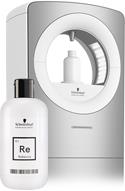 Beauty brands are using technology to help professionals offer clients a degree of personalization they can’t get online, and to encourage consumers to buy their products. Scanners and apps, working with data and artificial intelligence, can evaluate a customer’s precise hair or skin needs and recommend the best product for them. Schwarzkopf’s Professional SalonLab comprises a set of tools and devices that generate and evaluate data on the client’s hair, allow clients to try on products using augmented reality, and then produce personalized haircare product blends in the salon. The service is expected to be available in salons next year. Elemis SkinLab analyzes a client’s facial skin and helps the therapist recommend products and skincare regimes. Although these tools require the intervention of a professional, other devices, such as Neutrogena’s Skin360 app and SkinScanner tool works with a user’s phone for home use. The Beauty Genome Project by Proven, a skincare product company, uses a different approach to personalization, analyzing millions of customer reviews on 100,000 products to create what it claims is the largest skincare database in the world. Personalization in beauty looks set to continue its advance, with some companies already offering DNA analysis for product recommendations.[Image Credit: © Henkel]

Raya Khanin Highlights How Brands Use AI and Genomics To Improve Beauty Personalization
 In an interview, industry expert Raya Khanin, and the founder of personalized beauty company LifeNome, explained talked about how artificial intelligence and genomics, augmented by environmental and lifestyle factors, are being used to create personalized beauty products that best meet a customer’s specific skin requirements identified in their genetic profile. She provided a number of examples of how beauty brands are employing a range of new techniques to enhance personalization. FOREO LUNA recently launched fofo, a cleansing device with skin sensors to generate data that are analyzed by AI to create personalized skincare advice. [Image Credit: © LifeNome Inc]
Chanel South Korea Launches Online Platform For Cosmetics
 In South Korea, Chanel launched an online platform for its cosmetic products and service with a wrapping service and select deliver day option to encourage gifting. Separately, and in an attempt to attract young customers, particularly those in their 20s and 30s, Chanel Korea launched a Coco Game Center pop-up store which features game that feature the Chanel logo.[Image Credit: © Chanel, Inc.]
Two Brands Are Using Face-To-Face Contact With Consumers To Promote Their Products
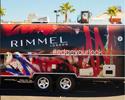 At the end of October, Nivea opened a pop-up store in London for the launch of the MicellAIR Professional cleansing line. The ‘Boo-tique’ has a Halloween theme and offers five looks by the brand’s professional make-up artists. Visitors can take away a free bag of products from the new range. In the US, Rimmel London is getting on the road during October and November with its (Street) Art of Beauty tour. Customers can visit the exclusive mobile salon, which is covered by graffiti created by the brand. The salon has makeup artists to help visitors choose Rimmel’s products. The tour goes to Los Angeles, Las Vegas, Phoenix, Dallas, Houston, Tampa and Miami.[Image Credit: © Coty Inc.]
Glossier Ads France To Its Geographic Reach
Glossier continues to expand internationally, adding France to the US, UK and Canada after first partnering with Colette, a French brand. Glossier’s founder, Emily Weiss, described the response from consumers in France as “incredible”. Weiss said the brand will soon launch in more markets globally, working only with companies that don’t conform to its cruelty-free policy.[Image Credit: © Glossier Inc. ]
CK Hutchison And Meitu Partner To Provide Magic Mirrors In Watson’s Stores
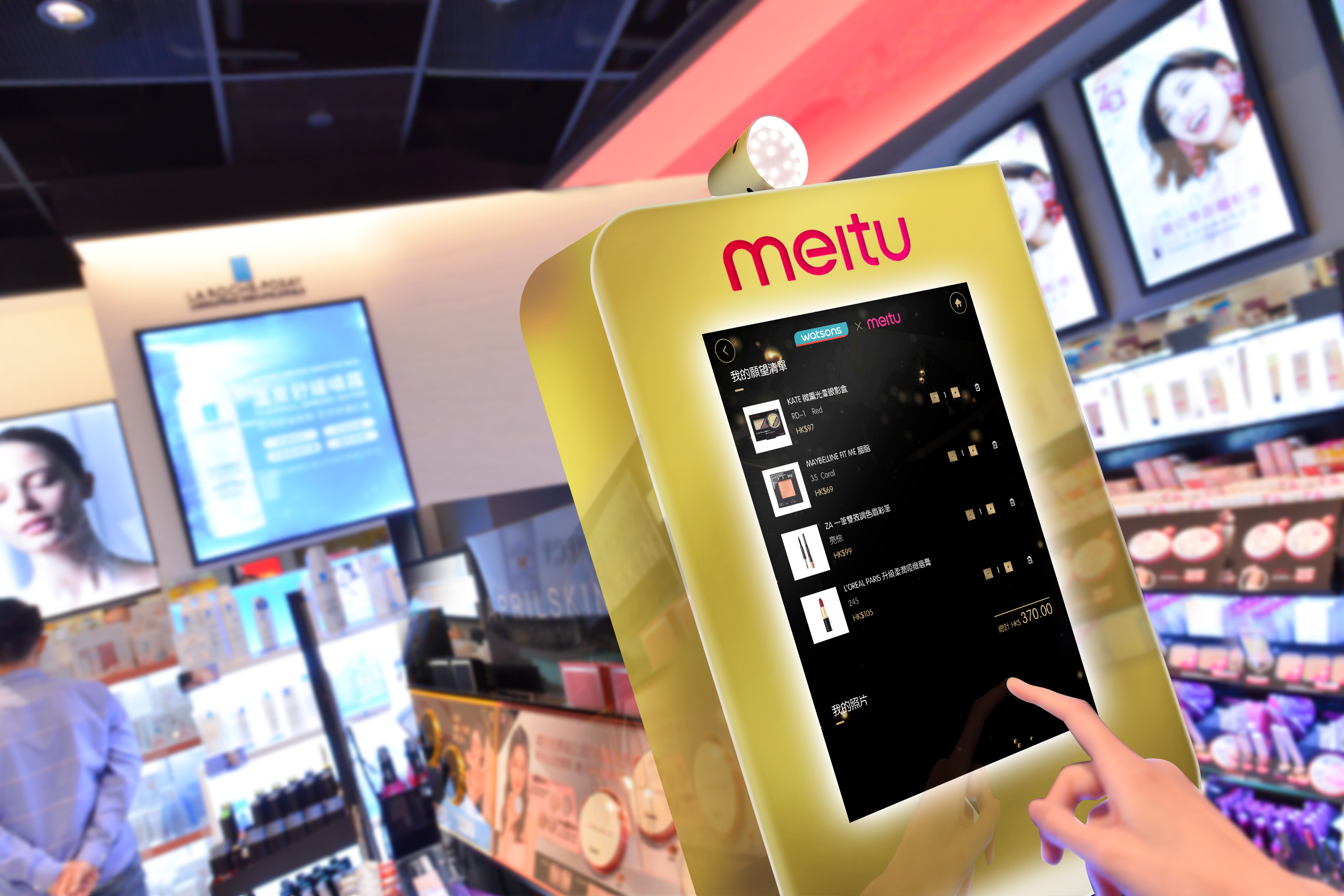
 Meitu and CK Hutchison, the parent company of retailer Watsons, are teaming up to create a new business model based on social media, to improve interaction with millennial consumers, both online and offline. The alliance matches Meitu’s artificial intelligence expertise and technology with CK Hutchison’s retail experience. Watsons Hong Kong will use Meitu’s smart mirror, the ‘Magic Mirror’, to enable consumers to virtually try beauty products on, choosing from some 600 make-up options. It will also provide recommendations from beauty advisors and should be available in around 30 stores by the middle of next year. Watsons China will use Meitu’s social media platform to send personalized messages and recommendations by analyzing changes users typically make to their photos. [Image Credit: © CK Hutchison Holdings Limited]
Symrise and IBM Collaborate To Develop The Philyra AI Perfume Platform
 A partnership between fragrance company Symrise and IBM is using machine-learning artificial intelligence to emulate the work of a perfumer. “Philyra” is an AI platform for scents that can be used in products for household and personal use, as well as in fine fragrances. The result has been two new perfumes to be launched in Brazil in mid-2019 by O Boticário, a beauty company. Philyra has the potential to disrupt the fragrance industry. It can analyze millions of bits of data, including taste, demographics and personality, and match them with ingredients. A single fragrance could take up to five years to develop and launch; the O Boticário scents took less than five months, although generating the initial fragrance might take Philyra just a minute or two. Symrise wants to roll out the technology to its master perfumers located around the world.[Image Credit: © Symrise]

Madison Reed Continues To Innovate For The Digital World
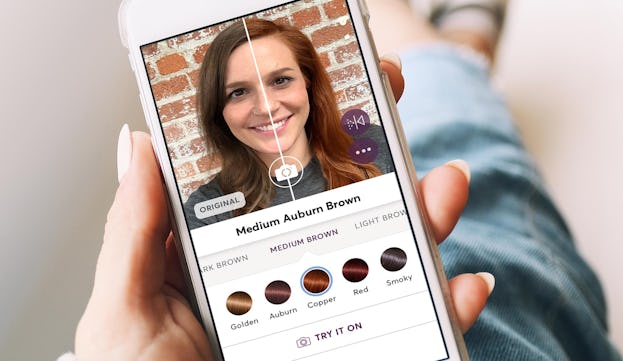
 Visitors to Madison-Reed.com are now able to “try-on” over 40 of the brand’s hair color products via their device’s camera or by uploading a selfie. The new feature has been developed in collaboration with Perfect Corp., which has developed the YouCam app. It represents YouCam Makeup’s debut within a direct-to-consumer website. The brand has been at the forefront of digital innovation, with the first chatbot analysis of a selfie to recommend color matches and its smartphone voice-controlled app that helps women follow application instructions without having to touch the device. [Image Credit: © Madison Reed, Inc.]
Avon Launches Personalized Beauty App in South Africa and UK
.jpg&width=125&height=53) Avon has launched its Personalized Beauty App, a tool to help Representatives offer a more personalized service. The analysis device predicts the customers skincare requirements and assesses their most appropriate shade of make-up, based on a questionnaire and skin tone measurement feature. The app is currently available in the UK and South Africa, and the company claims it has received strong positive feedback. Further development is focusing on making it available across different mobile platforms. [Image Credit: © Avon Products, Inc.]
Avon has launched its Personalized Beauty App, a tool to help Representatives offer a more personalized service. The analysis device predicts the customers skincare requirements and assesses their most appropriate shade of make-up, based on a questionnaire and skin tone measurement feature. The app is currently available in the UK and South Africa, and the company claims it has received strong positive feedback. Further development is focusing on making it available across different mobile platforms. [Image Credit: © Avon Products, Inc.]

Estée Lauder Allows Customers To Star In Their Own Fairytale
 Estée Lauder in Hong Kong is using artificial intelligence for its Wonderland Christmas campaign. The customer becomes a part of a virtual fairy tale by creating their own 3-D avatar using the Quantum Human technology. The promotion, held at various retail venues in Hong Kong, includes pop-ups where shoppers can take a ride on a “magical carousel” in a virtual reality fairytale featuring their avatar.[Image Credit: © Estée Lauder Inc]
Avon’s Russian Unit Opens Eight Pop Up Stores For Its Mark. Brand

Avon opened pop up Beauty Bars in eight Russian cities, featuring the full range of products from its “mark.” brand. Visitors can discuss the mark. products with in-store Representatives and be made up by make-up artists. Anyone wanting to buy the products can order them from the Representatives via a new online mobile shoppable brochure. The stores are also proving to useful for recruiting new Representatives.[Image Credit: © Avon Products, Inc.]

Retailers Are Increasingly Adopting AR Innovation From The Tech Companies
 Large retailers are embracing the use of digital technology like virtual and augmented reality to improve their service to beauty consumers. In the US, Target is leveraging AR in its Target Beauty Studio through the YouCam Makeup app from Perfect Corp. Other large retailers in beauty and other categories, like fashion, are also adopting high-tech, including smart mirrors and AR displays. This interest from retailers is being match by innovation from tech companies. Facebook is reportedly developing AR glasses and Microsoft has already launched HoloLens. Google, Apple and Lyft are apparently working on AR platforms too. Next generation AR might not need screens to display images: “spatial computing” could allow images superimposed on the real world.[Image Credit: © Microsoft]
Glossier Opens A New Flagship Store Where It All Began

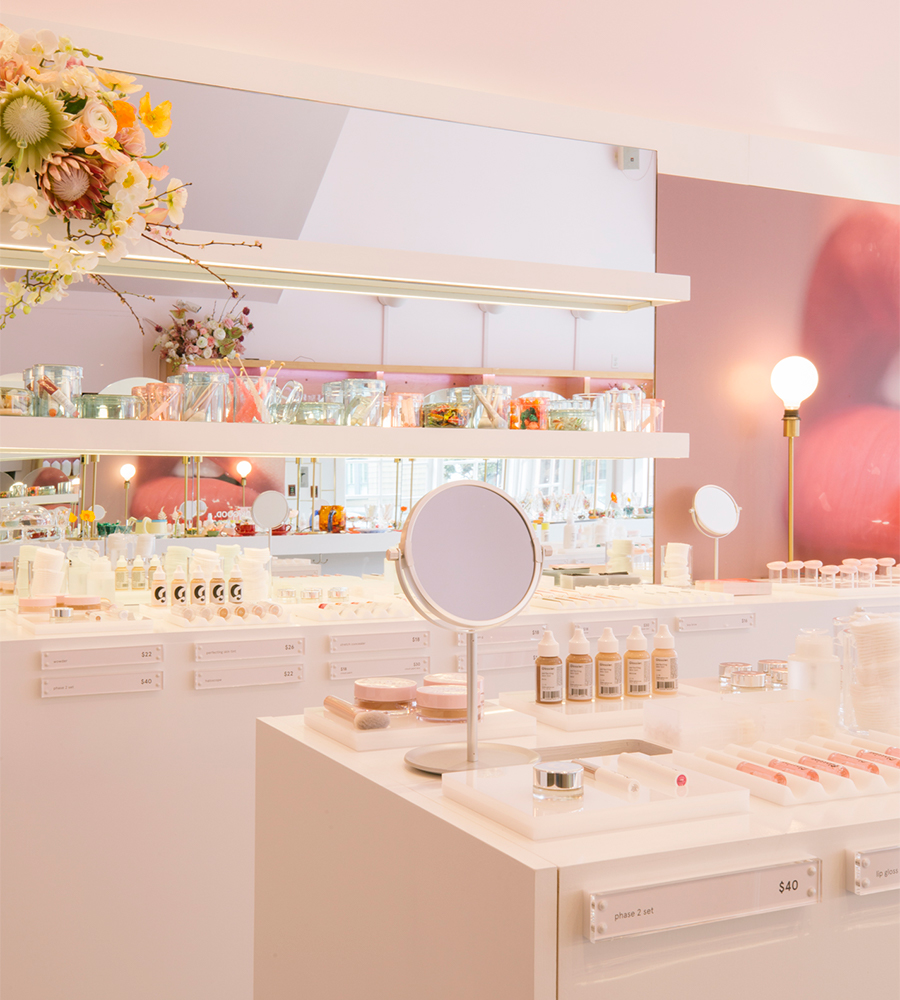
Beauty brand Glossier opened a flagship store on New York’s Lafayette Street, at number 123, where the brand was founded four years ago. Founder and CEO, Emily Weiss, said Glossier Flagship “is a nod” to customers that were with Glossier at the start, and ensures the brand stays in the conversation. The 3,000 square feet space is a permanent location and the "the ultimate physical expression of the brand", enabling customers to meet Glossier face-to-face. A part of the experience is a unique point-of-sale system, where online and offline sales are synced to allow customers to start an order in the store and finish it at home. It also features Glossier Offline Editors, the in-store representatives, who will “act like an educated and knowledgeable friend". [Image Credit: © Glossier Inc.]
Sephora And Google Partner To Bring The Home Hub To Beauty Consumers
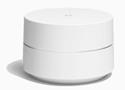 Google and Sephora have teamed up to bring Sephora’s YouTube content and Google Assistant together on the recently-launched Google Home Hub voice device, which forms part of Google’s voice assistant range, along with Home and Home Mini. It will compete directly with the Echo Show, Amazon’s screen device and Smart Display from Lenovo. Sephora customers will be encouraged to use the Home Hub to find beauty tutorials via voice. Google is responding to the growth in searches for beauty-related videos on YouTube. The collaboration marks the first formal partnership between the two. The Home Hub is available on Sephora.com and will also be sold in 10 flagship stores around the US.[Image Credit: © Google LLC]
Glossier’s CFO Outlines The Reasons For The Brand’s Success
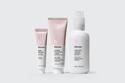 Henry Davis, Glossier’s president and CFO, highlighted five reasons for the beauty brand’s success. The 5Cs center on the brand’s consumers, its content, the conversations with consumers, the community it has created, and its success with co-creation. Davis says that Glossier has expanded its customer base beyond millennials and now has a much broader age following. He also said that content is the brand’s main growth driver, with a strong following for the “Into the Gloss” blog as well as a range of social media and video platforms. As a part of this effort, it encourages a two-way discussion with its customers, to find out what they think about the brand. Glossier focuses on the specific requirements of its customers, which the brand says amounts to co-creation. To improve the sense of brand community, Glossier has opened bricks-and-mortar locations: a new flagship store in the Soho district of New York City and a store in Los Angeles, as well as a number of popups. The company is now looking to build new “forums” for more conversations. [Image Credit: © Glossier Inc.]
HiMirror Introduces AI Tool For Use in Shops And Salons
.jpg&width=125&height=27) HiMirror is to launch two new interactive AI-based mirrors for retail use in January 2019. Enterprise Lite and Enterprise Pro evaluate the user’s skin care requirements to help beauty consultants in stores and salons recommend skin care products and regime. Users will be able to see if their skin has changed from a previous visit. They can also be customized for different product lines. The mirrors are being trialed by Marionnaud, a retailer in France.[Image Credit: © Cal-Comp Big Data, Inc]
HiMirror is to launch two new interactive AI-based mirrors for retail use in January 2019. Enterprise Lite and Enterprise Pro evaluate the user’s skin care requirements to help beauty consultants in stores and salons recommend skin care products and regime. Users will be able to see if their skin has changed from a previous visit. They can also be customized for different product lines. The mirrors are being trialed by Marionnaud, a retailer in France.[Image Credit: © Cal-Comp Big Data, Inc]

Clinique iD Provides Customized Hydration To Address Specific Skin Concerns
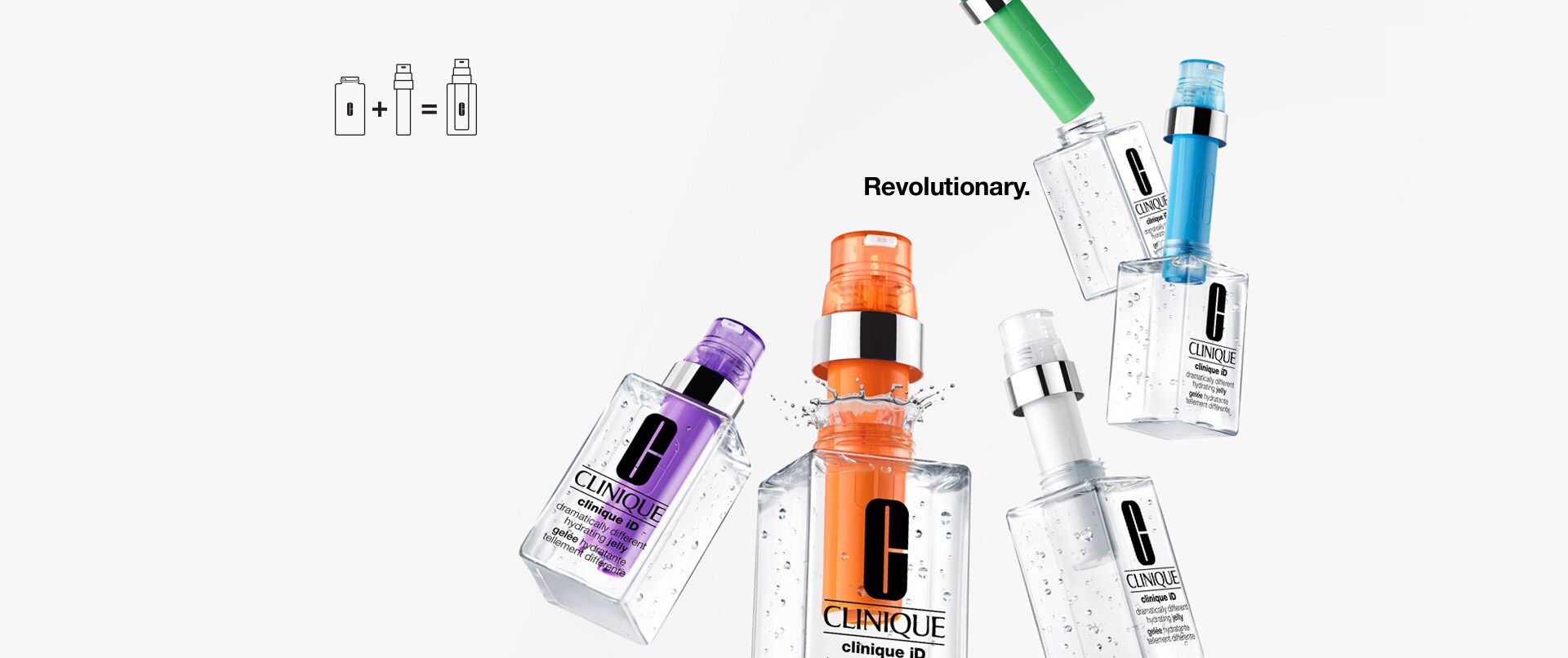
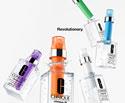 Now available on Clinique.com is Clinique iD, a personalized system for skin hydration based on its Dramatically Different Moisturizer skin lotions. Visitors to the site first choose from one of the lotions as a base, then add one of five active concentrate cartridges to mix with it. The cartridges fit inside the selected moisturizer and contain a formulation designed to address the user’s skin concern, such as irritated skin, wrinkles, or skin fatigue. Clinique’s approach may go some way towards addressing the issue that women can’t find a moisturizer that’s right for their face: the brand ran a survey of US women and found that 86 percent of respondents cited this as a concern. To help users choose the right blend, Clinique will next year roll out online and in stores the digital Clinical Reality questionnaire. A 125ml bottle is priced at $39 and should last three months with the recommended twice-daily application. [Image Credit: © Clinique Laboratories, llc]
COVERGIRL Unveils Its Flagship Store In New York’s Times Square
 The end of November saw the opening of the COVERGIRL TIMES SQUARE flagship store, the brand’s first permanent outlet. It’s on two levels and offers shoppers a virtual greeter, called Olivia, who can give beauty advice or direct you to a product you want. There are also Holition augmented reality stations for virtually try-ons, a customization station for customers to personalize products, and a makeup and advisory service from COVERGIRL BFFs (Brow Friends Forever). [Image Credit: © Coty Inc]
A Facebook Chatbot Is Driving Traffic And Sales For Wander Beauty
 Wander Beauty says that half of its sales are via its e-commerce site, with mobile the main driver. The high-end brand is expanding its online communication with consumers by using a Facebook chatbot. It asks customers six questions and the answers are used for product recommendations chosen by a customer service team. In the four months since it was launched, 17 percent of customers engaged with the chatbot and bought something, well above the industry average. Around 70 percent of its e-commerce traffic is coming from mobile and the chatbot within Facebook Messenger is helping to promote dialog between the brand and customers on the move. [Image Credit: © WANDER BEAUTY LLC]

More...


Copyright 2026 Business360, Inc.