
News for professionals in the beauty industry
Highlights
Beauty Brands Should Consider AI, Personalization, To Adapt To Industry Changes
 Beauty brands should take advantage of developments such as artificial intelligence, personalization, and the rise of indie brands in order to adapt to a changing market. According to Terry Young of Sparks & Honey, beauty brands should try to emulate the success of Instagram, Amazon, and Netflix by thinking “exponentially" rather than incrementally to create a competitive edge in the industry. Young, who is the CEO of the cultural consultancy company, said brands can achieve a 10X status by offering more personalized experiences, customized products, and actively engaging smaller brands in the fragmented, yet rapidly growing, marketplace. [Image Credit: © Sparks & Honey]
Facebook, Instagram Invest To Help Beauty Companies Reach Consumers
 Facebook and Instagram are emerging as powerful platforms for sellers of beauty products. Both platforms are rich with beauty content and Facebook (which owns Instagram) is investing to help beauty companies reach beauty consumers. AI, and especially its face recognition software, is enabling Facebook to better target user interests. It is also letting businesses have “real-time, one-to-one conversations with their customers over Messenger” (Karin Tracy, head of industry for beauty, fashion, luxury and retail, Facebook). Instagram Stories proved an effective way to deliver fun and behind-the-scenes content to young, mobile users. The number of followers on IS has grown rapidly, now standing at 300 million with more than a third of the most viewed stories provided by businesses. Facebook is also beta testing and trialing with Sephora an AR-enabled camera effects for use in Messenger. [Image Credit: © Facebook, Inc.]
Beauty Marketers Enlist AI Apps For Personalized Campaigns
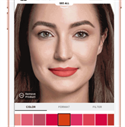 Beauty brands are adopting artificial intelligence technologies, including augmented reality, to create personalized marketing. With 70 percent of American women beauty buyers claiming being overwhelmed by product choices in a May 2018 survey by marketing firm Automat, beauty marketers see the need to provide consumers with product recommendations tailored to their needs. Beauty retailer Sephora’s Virtual Artist, for example, lets users upload photos in Messenger to virtually try on lipstick shades recommended by bots. However, marketers need to convince consumers to try and be comfortable with AI-enabled initiatives, with about a third of respondents saying they were unsure about using a virtual beauty advisor.[Image Credit: © Sephora USA, Inc.]
Facebook Lets Advertisers Use AR To Display Products On News Feed
Facebook has announced plans to allow advertisers to display their products on its Messenger and News Feed platforms using new technologies, including augmented reality. Facebook VP for product marketing for global marketing solutions, Ty Ahmad-Taylor, introduced AR-enabled ads that let consumers virtually try on sunglasses and makeup products. Beauty brand Michael Kors was the first advertiser to try AR ads, which include a “Tap to try it on” option.[Image Credit: © Facebook, Inc.]
Olay Uses AI-Enabled Marketing To Double Sales Conversion Rate
 Skincare brand Olay has doubled its sales conversion rate by using artificial intelligence to help focus and personalize its marketing. According to Nara Logics CEO, Jana Eggers, Olay’s Skin Advisor online skin-advisor tool has engaged more than 4 million customers. Nara Logics uses for Olay the same machine learning algorithm that is used for the U.S. intelligence community, Eggers said. She also said companies planning to use AI need not hire people with data science Ph.D.’s, with software engineers usually capable of and excited about using the technology.[Image Credit: © Procter & Gamble]
Innisfree Introduces New Retail-Equipped Store In China
 Korean cosmetics company Innisfree launched its first New Retail store in China. Located at the Li Xing Shopping Plaza in the country’s Hangzhou region, the store comes with New Retail digital and interactive features. Developed by Alibaba founder Jack Ma in 2016, New Retail is designed to use technology to combine online and offline shopping “into one comprehensive channel”. It offers customers convenience whether buying through an app or at an offline store. New Retail features include Magic Mirror, an AR-enabled technology which lets consumers virtually try makeup products; Smart Skin Analyzer, which analyzes the user’s skin and recommends the best Innisfree products based on the skin report; and Vending Machine, which lets consumers buy products at discounted prices using the Taobao mobile app.[Image Credit: © Innisfree Corporation]
Meitu Opens Meivolution Festival Highlighting AI Technologies For Beauty Applications
 Meitu Inc., developer of an online beauty ecosystem with 450 million users, launched its first Meivolution Festival in Shanghai, China. Combining the Chinese character Mei, which means beauty, with the English word evolution, the event marks the first time the company hosts an offline event. During the festival, Meitu users can join their communities and friends using photography, augmented reality, and image optimization technologies offered by the company. Also, during the event, Meitu will highlight technologies, including artificial intelligence for testing skin quality and providing make-up tips.[Image Credit: © Meitu]
HiMirror Measures Skin, Recommends Treatment Options
 HiMirror, an internet-connected smart mirror, lets users scan and analyze their skin. Designed as an “at-home beauty and fitness consultant”, the device allows users to sign in with their face and access its functions using an interactive touchscreen. Its daily skin analysis gauges 10 indicators, presenting the results as a slide show or through a mobile app. Equipped with LEDs, the mirror includes five lighting settings and lets users zoom. [Image Credit: © Cal-Comp Big Data, Inc.]
Sephora Employs Five Digital Tools To Give Customers Personalized Omni-Channel Experience
 Beauty retailer Sephora uses five ways to provide customers with personalized services and tools, according to chief engineering officer Raghu Sagi. With everything starting with what the customer wants, the company lets customers virtually try on products through its Virtual Artist virtual reality tool. Launched in 2017, the Beauty Insider Community provides a virtual social network for customers, allowing them to link up with each other, ask questions, and receive recommendations. Whenever a customer approaches a Sephora store, the company's mobile app becomes the Store Companion tool which offers customers tips and product recommendations. [Image Credit: © Sephora USA, Inc.]

Sephora Is Using Personalization Tools To Enhance Customer Experience
 Beauty retailer Sephora is focusing on personalization, using a range of tools across its channels, to meet growing consumer expectations for shopping experiences. These include the Virtual Artist try-on tool, applicable across various categories; the Beauty Insider Community, for followers of beauty trends to connect with others in real time; its mobile app and Store Companion tool, providing product recommendations and other useful information; guides for skincare and makeovers, including videos; and its new Skincare Advisor on Google Home, Sephora’s first voice tool, with which users can book in-store appointments, listen to beauty news and more. [Image Credit: © purplegillian from Pixabay.com]
Kanebo Subsidiary Launches MemoMi Digital Mirror Service
 Japanese beauty brand Kanebo’s subsidiary, e’quipe, Ltd., plans to launch a service featuring the digital mirror developed by Silicon Valley-based MemoMi Labs Inc. Buyers of SUQQU brand of cosmetics can experience the service while receiving a Gankin facial muscle massage at some retail stores. According to the company, a built-in digital image recorder will record the facial massage session and sends the video to the customer’s smartphone.[Image Credit: © memomi]
Avon Names Conversano Head Of Company's Expanded Digital Operations

Avon Products, Inc. announced the appointment of Benedetto Conversano as SVP and Chief Digital and Information Technology Officer effective September 3, 2018. Conversano will succeed GVP and Chief Information Officer Sue Liddie and will assume additional duties and responsibilities as head of the company's digital strategy. He was Chief Global Information Officer at Jeronimo Martins where he was in charge of the international food, health and beauty retailer's B2C transformation.[Image Credit: © Avon Products, Inc.]
Samantha Bort Talks About L’Oréal USA’s Focus On New Technology
 In an interview with The Drum, Samantha Bort, manager of digital innovation and entrepreneurship for L'Oréal USA, discusses the importance of new technology at the company. She said new technology needs to answer some key questions: why it exists and how it will improve the consumer’s experience, and also do the developers have a long-term plan for it that will benefit L’Oréal. In Bort’s opinion, AI is an exciting opportunity, enabling the company to provide a personalized experience at scale, highlighting the 2017 launch in the USA of the company’s first chatbot, for Kiehl’s on Facebook Messenger. She is currently most excited about “conversational commerce”, with chat and voice bringing new opportunities, and blockchain. [Image Credit: © Gerd Altmann from Pixabay.com]
Aloette Cosmetics Launches A-List Loyalty Program With Subscription Boxes
 Aloette Cosmetics said it has launched Aloette A-List, a loyalty program exclusive for members only. Featuring bi-monthly subscription boxes, the program also provides members with product discounts and offers, as well as for-their-eyes-only updates. Priced at $19.95 per month, the subscription box is valued up to $150 and comes filled with full-sized Aloette products and a surprise gift.
[Image Credit: © Aloette Cosmetics, Inc.]
New Study Highlights Growing Use Of Beauty Advisors
 According to a new study by Automat, US beauty shoppers are embracing the use of advisors to provide tips and product recommendations. Beauty advice is now being channeled through new tools, including chat, as well as texting and live video. The survey found that 49% of respondents would definitely or likely use a virtual advisor when shopping online or offline, to help them navigate the growing number of options - 70% say they are overwhelmed by product choice. However, around two-thirds would prefer to browse in-store without an advisor, making it easier for advisors to reach consumers online. 78% prefer to look online before they buy in any channel. The study concluded that brands need to consider chatbots and artificial intelligence. [Image Credit: © Porapak Apichodilok]
AI Advances Will Create New Opportunities Throughout The Beauty Supply Chain
.png&width=125&height=104)
The global cosmeceuticals is sector expected to attract over US$60 billion in sales by 2020, and artificial intelligence could provide an opportunity for more brands to offer customized beauty solutions. AI is already being adopted by some brands, with AI personal stylists, chatbots and product recommendations. The haircare category is one that is embracing the opportunities afforded by AI and machine learning developments to, for example, create a formulation personalized for the consumer’s hair type, and packaged with a personal touch, which will define new frontiers for the packaging industry too. In fact, AI will be increasingly integrated throughout the supply chain, and create the platform for even deeper communication with the consumer. [Image Credit: © Simona Šimonová]
Clarisonic Has Unveiled Two New Skincare Devices
 L’Oréal’s Clarisonic brand has launched two new skin care devices: Mia Smart and Mia Prima. Mia Smart uses the Clarisonic sonic technology to offer anti-aging and makeup applications, with personalization provided by a mobile app connected via Bluetooth. Mia Prima is a 60-second daily face cleansing tool for all skin types. Clarisonic was founded on blending technology with beauty, and these two new tools come some 15 years after it introduced its first device. The recommended retail price for the Mia Smart is $199 and the Mia Prima $99.[Image Credit: © L'Oréal (UK) Ltd]
L’Oréal And Facebook Team Up For AR Makeup Experience Using Modiface
 L’Oréal, using its recently-acquired ModiFace solution, is collaborating with Facebook on creating an augmented reality makeup try-on experience through the social media platform’s camera products. Facebook says this brings AR into the mainstream. L’Oréal’s Chief Digital Officer, Lubomira Rochet, said that the two companies share a belief that AR is becoming an increasingly crucial way for consumers to discover brands and products.[Image Credit: © Modiface Inc.,]
Virtual Beauty Try-Ons Could Be Available In-Flight
 Augmented reality tools are becoming mainstream in travel retail stores in airports around the world. Sunglass Hut had a “magic mirror” in its store in Queen’s Terminal, London Heathrow, some four years ago. The trend is being extended to the airports’ beauty stores. Last year, the Lancôme holiday pop-up In Singapore Changi’s Terminal 3 allowed users access to the AR makeover app, Virtual Mirror, and in the new Terminal 2 building at Incheon International Airport in South Korea, Lancôme and Chanel stores are using interactive and virtual tools. AR technology in the duty-free shops is getting more sophisticated, and it could be extended to the air too, with travelers “trying on” and buying products in-flight. Qantas and Air France are among airlines testing AR entertainment systems. [Image Credit: © maicou3834 from Pixabay.com]
Shiseido Emphasizes Tech In Its Growth Strategy
.png&width=125&height=40) Like some of its rivals, beauty brand Shiseido is looking for acquisitions to bolster its push into technology. It has acquired three US startups in the last 24 months. One is focused on artificial skin, one on personalized beauty; and the other on artificial intelligence. Shiseido has launched Optune, a device customers can lease monthly. It works via a smartphone app to scan and analyze skin condition and mood, taking weather conditions into account, to recommend a personalized combination of products. CEO Masahiko Uotani has pushed the company’s M&A strategy away from expanding scale to focusing instead on technology that can be used across its businesses. [Image Credit: © Shiseido]
Like some of its rivals, beauty brand Shiseido is looking for acquisitions to bolster its push into technology. It has acquired three US startups in the last 24 months. One is focused on artificial skin, one on personalized beauty; and the other on artificial intelligence. Shiseido has launched Optune, a device customers can lease monthly. It works via a smartphone app to scan and analyze skin condition and mood, taking weather conditions into account, to recommend a personalized combination of products. CEO Masahiko Uotani has pushed the company’s M&A strategy away from expanding scale to focusing instead on technology that can be used across its businesses. [Image Credit: © Shiseido]
L’Occitane Is Opening A Concept Store In New York
 The L’OCCITANE Group is opening a concept store for its L’OCCITANE en Provence brand on Fifth Avenue, New York. The natural cosmetics brand aims to provide a destination that will communicate to visitors its key features and encourage consumer engagement. The brand is following a “glocal” approach in creating exclusive brand experiences and has recently opened new concept flagship destinations in France, Brazil, China, Singapore, Canada and the United Kingdom. The Paris store, for example, offers food inspired by some of the brand’s iconic ingredients. Christina Polychroni, the brand’s North American Chief Marketing & E-Commerce Office, says that visitors to the New York store can use immersive installations to explore the brand’s history and signature products.[Image Credit: © L’OCCITANE Group]
Chanel Launches New Male Beauty Line, Starting In South Korea
 In September, Chanel will launch its first male beauty line, Boy de Chanel, in South Korea. It will feature three products: a lip balm, eyebrow pencil and a tinted fluid. The line will also be rolled out online from November on the Chanel site. The range is named after Gabrielle Chanel’s lover, Boy Capel.
Companies, Organizations
Technology-Driven Personalized Marketing Lets Beauty Retailers Avoid Bankruptcy Fate Suffered By Other Retailers
Beauty retailers’ adoption of technology to create personalized marketing has helped them avoid the bankruptcies affecting the rest of the retail market. Data from the timeline released by CB Insights in March 2018 showed beauty retail is growing faster than the apparel and footwear segment of the retail market. Marketing technology investments made by beauty retailers include L’Oreal’s acquisition of ModiFace, a company that integrates augmented reality into apps operated by several beauty brands, including retailer Sephora. Department stores, including Target and Saks Fifth Avenue, are implementing AR-enabled apps and platforms.
More...


Copyright 2026 Business360, Inc.